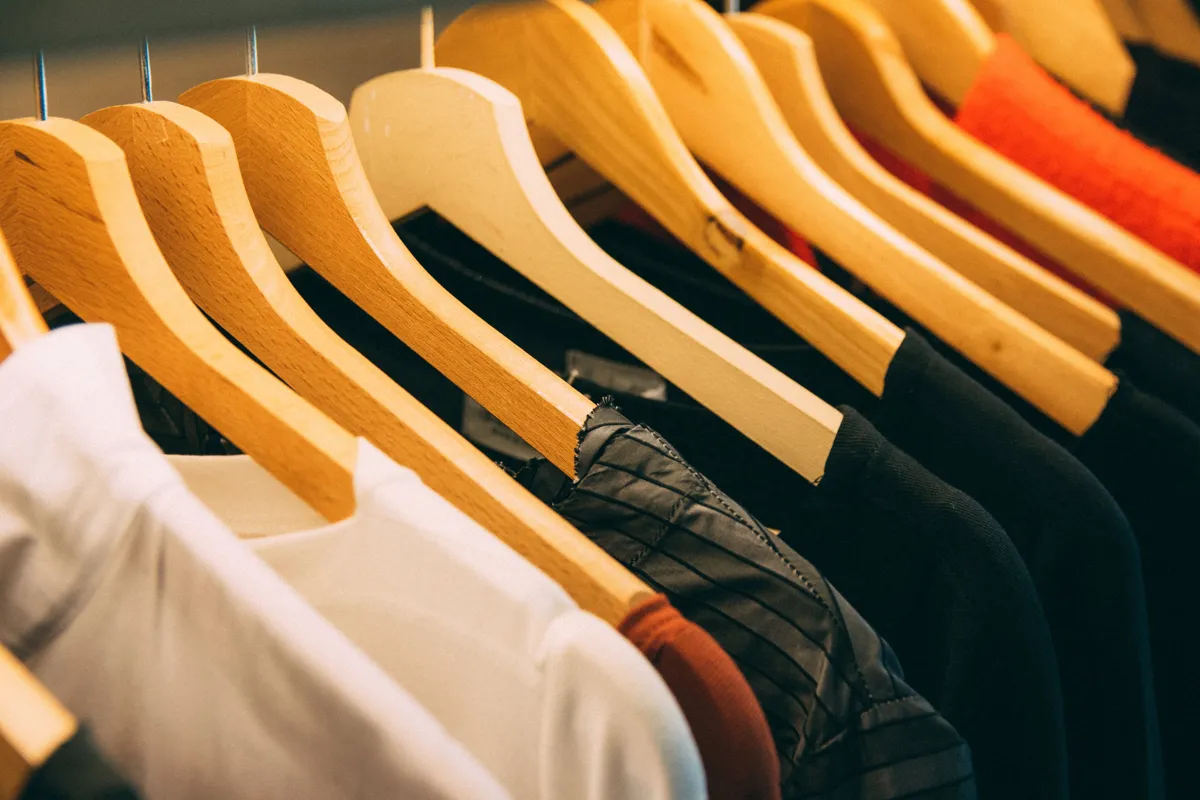

Choose a small range of wholesale blanks
Start with one design and the garment your customer is most likely to buy. An Etsy personalised gift shop could start with one tee and one tote. An eBay seller can use sold listings to compare similar items and delivery prices. On Shopify or an independent shop, use existing order data or customer requests to decide which fit and colours to sample. Two colours across five sizes already create ten stock lines before you add a second design.
- Bulk plain T-shirts. Compare neckline, fabric feel, opacity and fit. As sampling benchmarks, try a 150–170 gsm tee for a lighter feel and a 180–220 gsm tee for more structure. Hold light colours against the light and see how the design sits when the shirt is worn.
- Blank hoodies. Compare a midweight sample with a heavier one if buyers want a substantial feel. Check pocket placement, hood thickness, the usable print area and the packed weight. For zip hoodies, check whether your design needs to clear the zip.
- Crewneck sweatshirts. A smooth face and an uninterrupted front give you space for a central print. For a small embroidered logo, check how the chest sits after stitching and washing. Try a roughly 280–320 gsm sample as a starting point if you want a midweight layer.
- Blank tote bags. Check handle length, capacity, fabric thickness and the flat area between seams. Try a light cotton shopper for event giveaways or a heavier canvas tote for retail merch. Check care instructions before deciding how to test the decorated bag.
GSM means grams per square metre of fabric. Treat the ranges above as sampling suggestions. Knit, composition and finishing also affect drape and opacity. Use the actual packed parcel weight and dimensions when pricing postage.
Match the blank to DTF, screen printing or embroidery
DTF transfers. Start with a smooth surface and check the transfer supplier’s instructions for fabric, time, temperature and pressure. Keep pockets, seams and zips clear of the pressing area. On coloured polyester and blends, test for dye migration and heat marks on the actual colourway. Inspect the print again the following day as well as after washing.
Screen printing. Ask the printer to check fabric composition, face texture and garment colour against the ink and curing process. Get a price at your likely repeat quantity, including screens and setup. Approve a print on the actual blank, especially where light ink goes onto dark fabric.
Embroidery. Ask for a stitch-out using the final logo, placement and garment. Check the backing, hoop access and how the design hangs when worn. A dense design can pucker or distort a light knit. Include digitising in your first-run budget. See the Madeira embroidery backing guide for why fabric support matters.
Sample your exact sizes and wash-test the finished garment
- Record the supplier code, colour, composition and size. Order a sample in the exact colourway you plan to sell. Try two adjacent sizes or both ends of your proposed range where fit is a concern.
- Measure the garment laid flat across the chest and from shoulder to hem. Record the sleeve length if fit depends on it. Put measured garment dimensions and the measuring method in the listing.
- Decorate one sample at full artwork size. Photograph the placement and keep a second blank or a clear before photo for comparison. Look for seam interference, press marks and distortion.
- Follow the blank’s and decoration supplier’s compatible care instructions. Repeat a few normal wash and dry cycles where permitted, remeasure, and look for shrinkage, twisting, fading, peeling and puckering. For sponge-clean-only totes, follow that care method. Record the test conditions and any failure before ordering more.
Use the approved sample for product photos. If you buy multiple styles, give each its own fit notes. The same letter size can fit differently across two garments.
Work out the landed cost per saleable garment
Divide the cost of the run by the number you can actually sell. Include blank garments, inbound delivery, decoration and setup. Count any wash-test pieces or rejects in the spend and exclude them from the saleable quantity.
Illustrative example. Buy 30 blanks at £4 each, spend £12 on inbound delivery, £60 on decoration and £18 on setup. That’s £210 for the run. If two pieces are used for testing or rejected, £210 ÷ 28 is £7.50 per saleable garment. These figures are examples. Enter the £7.50 alongside outbound delivery, packaging, marketplace fees and your allowance for returns in the SellerBundle product profit calculator. Keep the VAT basis consistent across costs and revenue.
First wholesale clothing order checklist
- Shortlist one main garment and one alternative. Record style codes, exact colours and intended decoration.
- Approve a decorated sample, record measurements and photograph it for your listing.
- Check current availability by size and colour, delivery for your postcode and the supplier’s returns terms before placing the order.
- Set the size mix using orders or buyer enquiries. Keep some budget for reorders of the sizes that sell first.
- Count and inspect the delivery before decorating it. Keep a record of any faults against the order.
For more sourcing options, see the SellerBundle UK suppliers directory.
Frequently asked questions about buying blank clothing
What is a good first product for a small clothing brand?
Sample a plain tee in a colour that suits your design. It gives you a straightforward way to test the print, price and size chart. A tote is an option if you want to test the artwork with fewer size variants.
Can I print the same artwork on every size?
Check it at actual size on your smallest garment and largest garment. A full-width design can sit too close to the seams on small sizes or look too small on larger ones. Test a second artwork size if the placement looks wrong.
Should I buy a full carton to get a lower unit price?
Compare the total cash committed and the likely cost per saleable item. If you have little demand data, price a smaller trial and a repeat order before committing to a full carton.
How do I make reordering easier?
Save the supplier code, colour, size, decoration settings and artwork version for each SKU. Before a repeat run, check the colour and measurements against your retained sample.